

How BioWare went back in time to make Mass Effect Legendary Edition | PC Gamer - mckaythimpubstur
How BioWare went back in time to make Volume Effect Legendary Edition
When Mass Result was first announced in 2005 during Microsoft's X05 league in Amsterdam, its house trailer declared: "The developer of legendary RPGs of the past brings you a spectacular RPG of the prospective." That wasn't reasonable BioWare saying it was fashioning a sci-fi game—we already had Star Wars: Knights of the Used Republic, later on all—but that it was going to show us what RPGs could embody in the future. A fully voiced champion, dialogue sequences with cinematic framework, name actors the like Keith Jacques Louis David and Seth Green, an interconnected trilogy, evening shooting that power not suck. Though building along the choice-and-consequence construction of games alike Knights of the Old Republic and Wear out Empire, Mass Impression was billed as a significant abuse forward.
That makes information technology strange to think of Mass Effect as old. But all over a decade later, information technology clearly is—which is why BioWare have taken it and its cardinal sequels, positive almost all of their DLC, and remastered and tweaked them to make Tidy sum Effect Legendary Edition. This is BioWare's chance to bring the "salient RPG of the future" into the future it helped create.
"You good-hearted of forget how far you've come," says type and environment director Kevin Modest. "Then you recur and you play the original for marketing material or something, and you're the likes of, OH, wow! It's jarring."
As the project neared its end, assorted members of the squad replayed the original over one of their regular Fri afternoon Whizz along chats, looking back to remind themselves where they'd begun. "We literally spent like 20 minutes disagreeable to win over ourselves something was wrong," says project lead Mac Walters. "Information technology was look-alike, 'You're non doing IT correctly. This doesn't look right. I imply, it wasn't this bad.' And and then going back to YouTube videos, we were like, 'Ohio atomic number 102, I guess that is what information technology looked like.' Not say that the original looked bad, but we'd just been staring at the new one for so long. Yeah, it was quite the entertaining half hour of us trying to debug a game that was 14 geezerhood old."
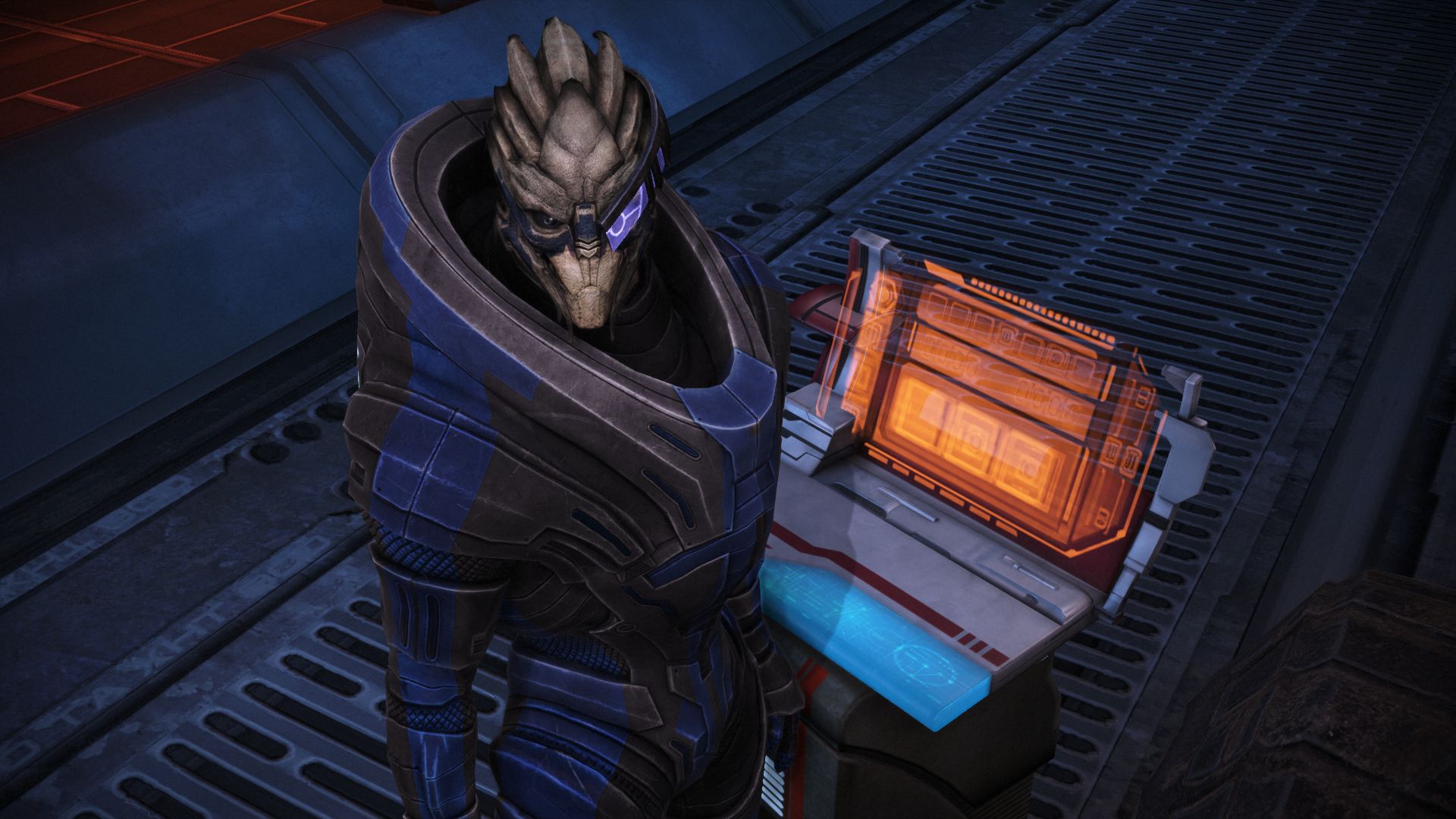
Patc more than just visuals were improved for the Legendary Edition, it was important to make the cardinal games spirit unified. Part of the trilogy's appeal is that you bring the same Shepard with you, booting up the next chapter to be greeted by a familiar face. That feeling can simply be enhanced by making the games look like they weren't free years apart.
One of the first steps in that operation was using AI, as well as some tradition tools, to upscale every texture in all three games. "I'll admit, I was a little of a naysayer about the AI up-res ab initio before we got in," admits Submissive, "because on that point's that meme around, 'heighten, enhance'. IT's look-alike how I, atomic number 3 a young artist, might have time-tested to stretch a texture bigger than it's supposed to beryllium, and terminated-pointed it and got worse results, right, at the finish?" Meek gained confidence in AI upscaling when the squad looked at what modders of the original games had already achieved with it—mods similar A great deal of Textures. "We looked at them, and we're like, 'Wow, they're acquiring these great results!'" he says.
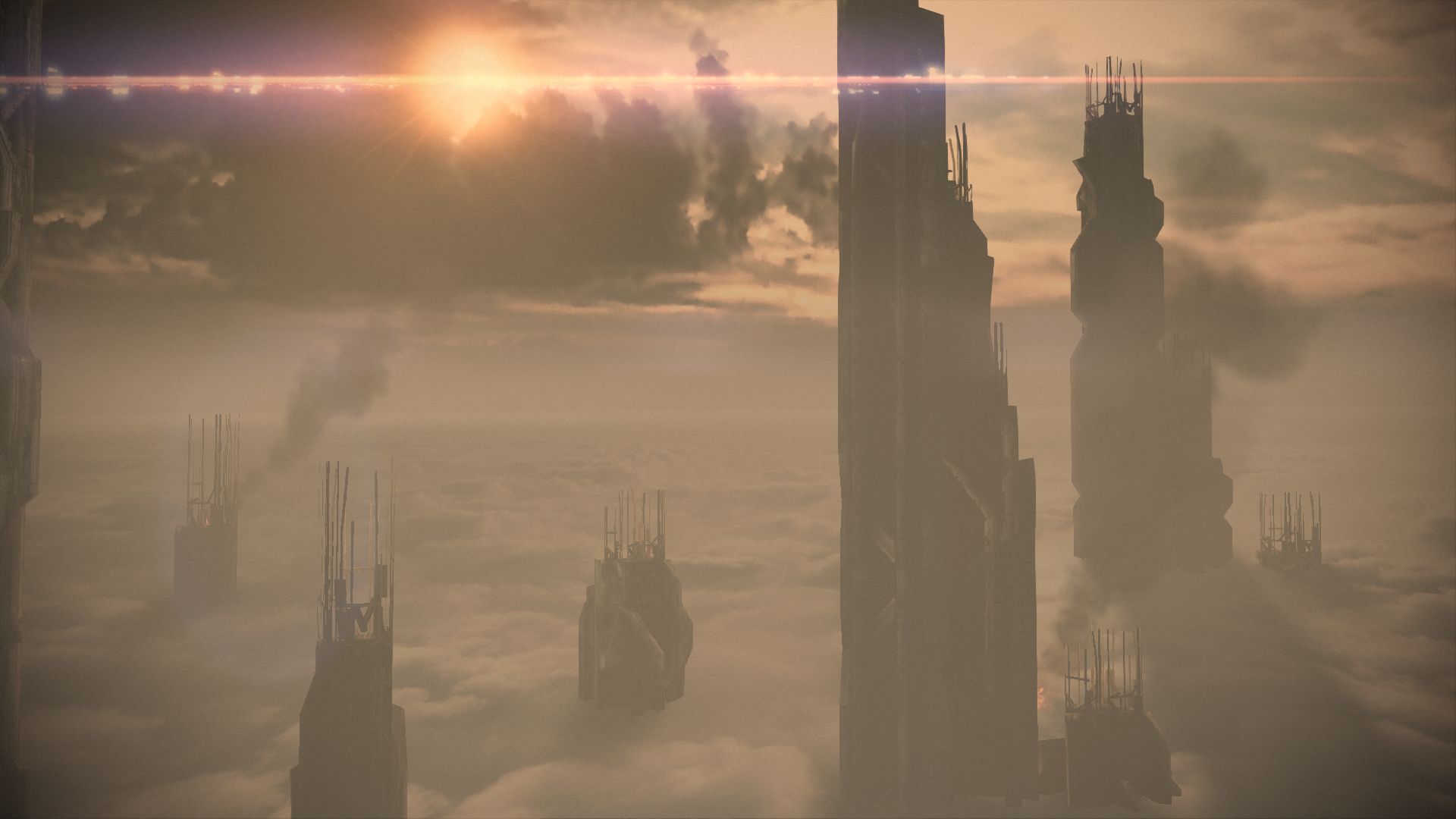
After the AI upscaling, artists played through each area to see what else could be improved, altering things to bring them more in line with the first intent for a scene, pickings advantage of modern processing power to occupy spaces left hand blank or remove walls placed to break line of descent-of-sight while the field rump them loaded. The improvements made by modders set a benchmark for what BioWare wanted to achieve.
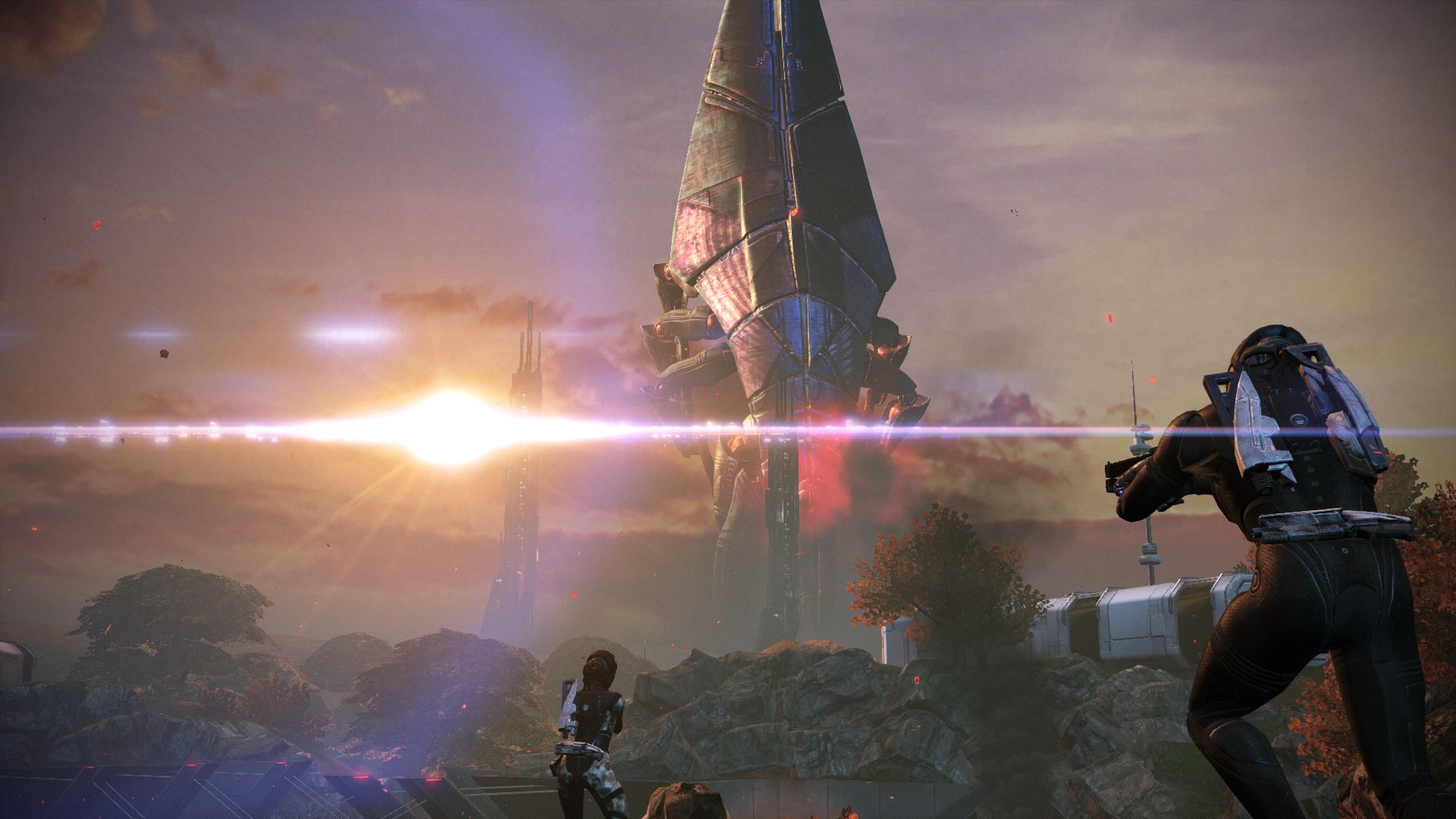
They also helped show other changes players were interested in. For example, popular mods gave players more hairstyles to choose from, more nonchalant outfits to whittle away from combat, and a photo mode to frame and capture their favorite moments—entirely features of the Legendary Edition. "You can project A: where people devoted most time to improve the originals, and then B: which of those mods themselves were the just about popular, and look to be getting the most grip," Walters says. "So aside from combing through forums and old reviews and everything like that, that was an initial great data go under for United States to go on, 'OK, this is what's important to people.'"
Years of forum posts and patch mods also highlighted remaining bugs, like the disreputable "black blobs" that would put back enemies on a couplet of planets if you played the initiative game on an AMD CPU, Beaver State the fact that Garrus has a blurry side because IT loads a low level-of-detail model you're supposed to see when he's at a distance. One particularly common bug in Mass Effect 2 would clip you on top of walls or objects, OR even empty blank above sloped walkways, then chain you there.
"What we affectionately call the wall up-hump bug was a disobedient extraordinary," says Walters. "It seemed similar maybe information technology was a content thing, then in the end was actually a code fix that we had to conform and get that functioning. That one, I can't remember how long one of our programmers spent on it, but IT was finished a month."
Players were indeed wont to the badger they'd come up with their own ways around it. "There's a altogether section on the Batch Force 2 wiki of how to enable your dev console and ghost mode off that, because it just happens all the time. You run up a railing, you touch something wrong, and you'Re up there, and you're stuck."
IT was much an painting part of the game that Meek suggests one group of players will be frustrated by its petit mal epilepsy. "I think the speedrunners are going to be mad that we fixed that one on them," he says.
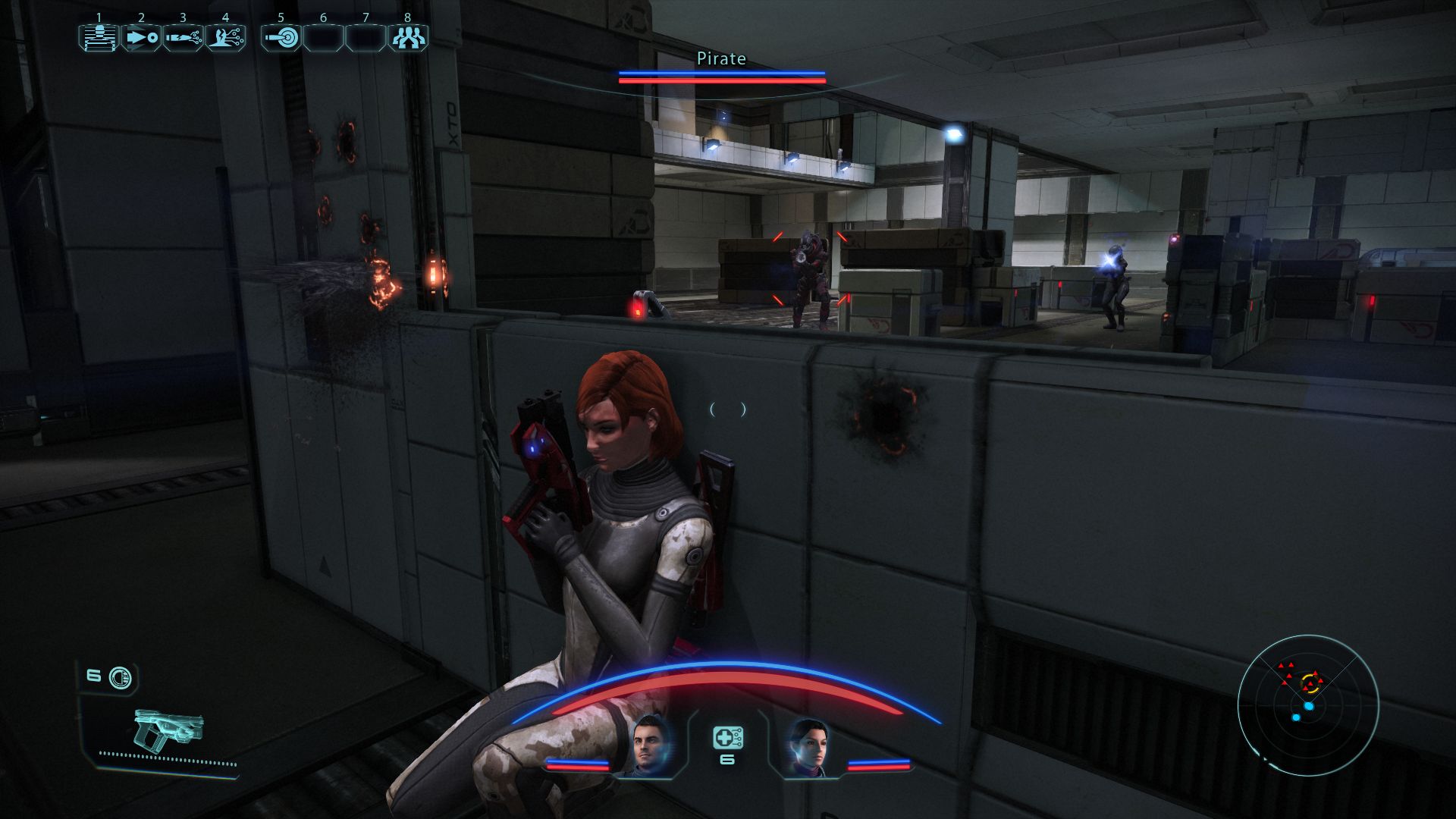
(With Meek's mention of the developer solace, I let to ask astir its position in the Unreal Variant. In the first game players could access to the console after changing an .ini file, and in the sequels by downloading .dll files, and then manipulation cheats ilk god musical mode or superpowered weapons and armour. "Those kinds of commands still do exist, like-minded God and GiveSuperGun and whatever," Humble says. "Those harbour't changed, so I think the editors at Mass Effect wikis should represent largely happy with the free.")
Other bugs that took a patc to work up were animation oddities, something I don't think the great unwashe making gifs of characters pull weird faces in Mass Set up: Andromeda remember were parting of Masses Effect from the beginning. "You'd have a conversation with Chakwas, and she'd be veneer the wrong way the entire conversation," says Meek, "or like lots of vivification pops."
Those animations use a LookAt function, guiding each character to a special point in space. "When you're looking a point in space, you're naturally going to die down boss-eyed," Meek explains. "There's definitely gonna still exist some moments where you'rhenium like, 'Buckeye State, is that person a little number crabbed-eyed or not?' But we spent a lot of time, the tech animators and the designers and the character artists, just figuring out bantam half-degree tweaks Hera and in that respect or changes to the system to try to downplay the identification number of times that's passing to catch your care."
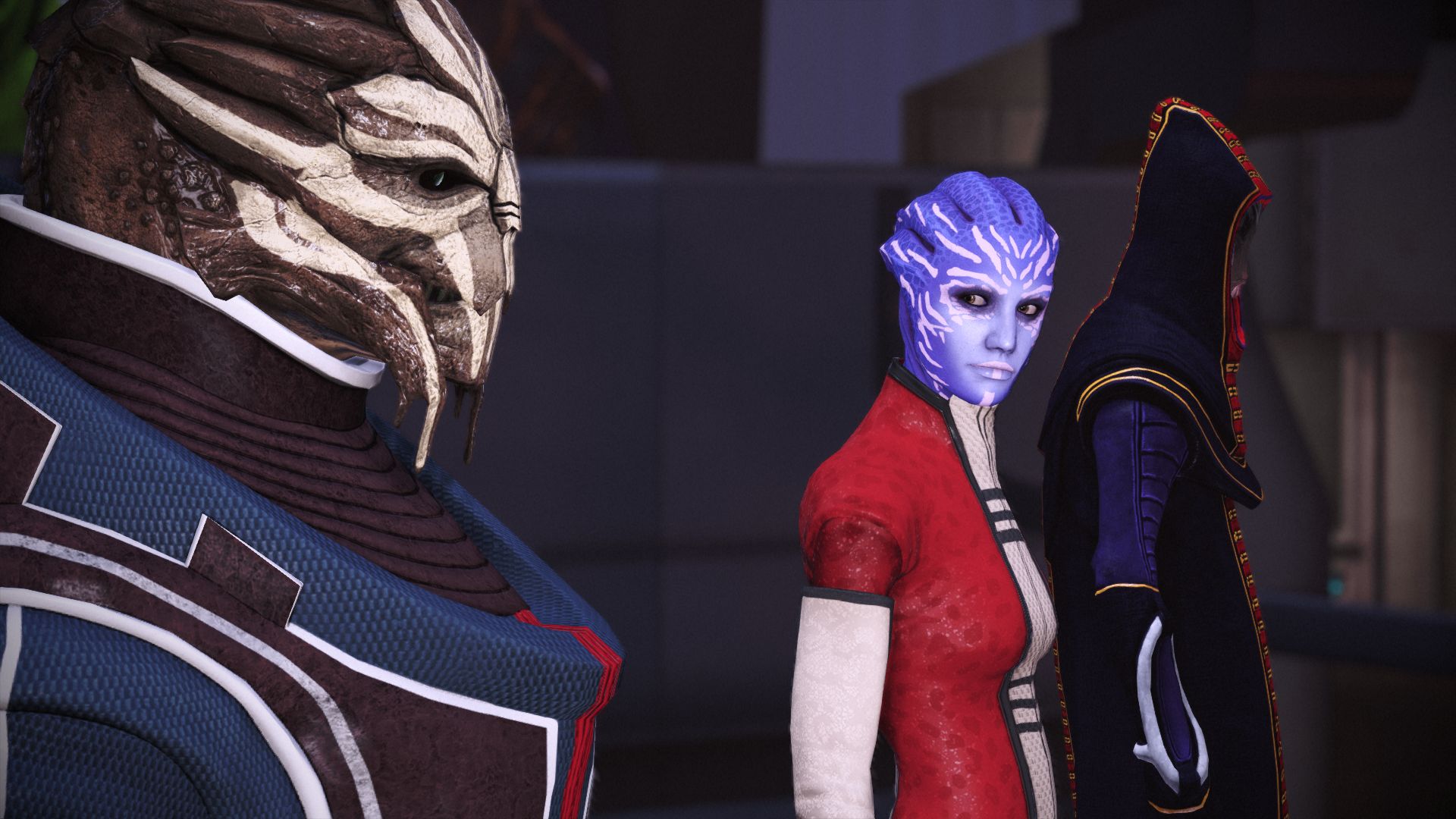
While every last three games were subject to wiretap-fixing and visual overhauling, the 1st Whole lot Effect has the most significant changes. Its UI has been brought more in transmission line with the sequels, as has its fighting and experience system—IT originally had a maximum level of 60, which was insurmountable to hit in a unvarying playthrough. You'd have to go through new-game plus to get those final 10 levels if you treasured to implication a maxed-out Shepard into Mass Effect 2.
That's been changed in the Legendary Edition, which has half as many levels but hands out twice as umteen talent points, though you can switch aft to the original experience if you prefer information technology old-school. BioWare understands how in-person Mass Effectuate is to its fans, and wants the Legendary Edition to still smel like the Tidy sum Effect they remember. For instance, while you can press spacebar to skip past the infamously slow elevator rides premeditated to camouflage its recollective loading times, if you deprivation to sit tight and listen to the squad banter and galactic news bulletins recorded to fill those gaps, you can.
Piece they borrowed third-person cover shooter mechanics and controlled plenty of action mechanism setpieces, the Mass Effect games would sometimes balance that with a surprising amount of downtime. "There is sure in Mass Effect 1 and even in parts of Mass Burden 2 a more meditative journeying that you can take," Walters says. He recalls that when the first game's uncharted worlds were designed, he was thusly impressed he spent years just driving close to looking at things, and found himself doing the same again in the Legendary Edition.
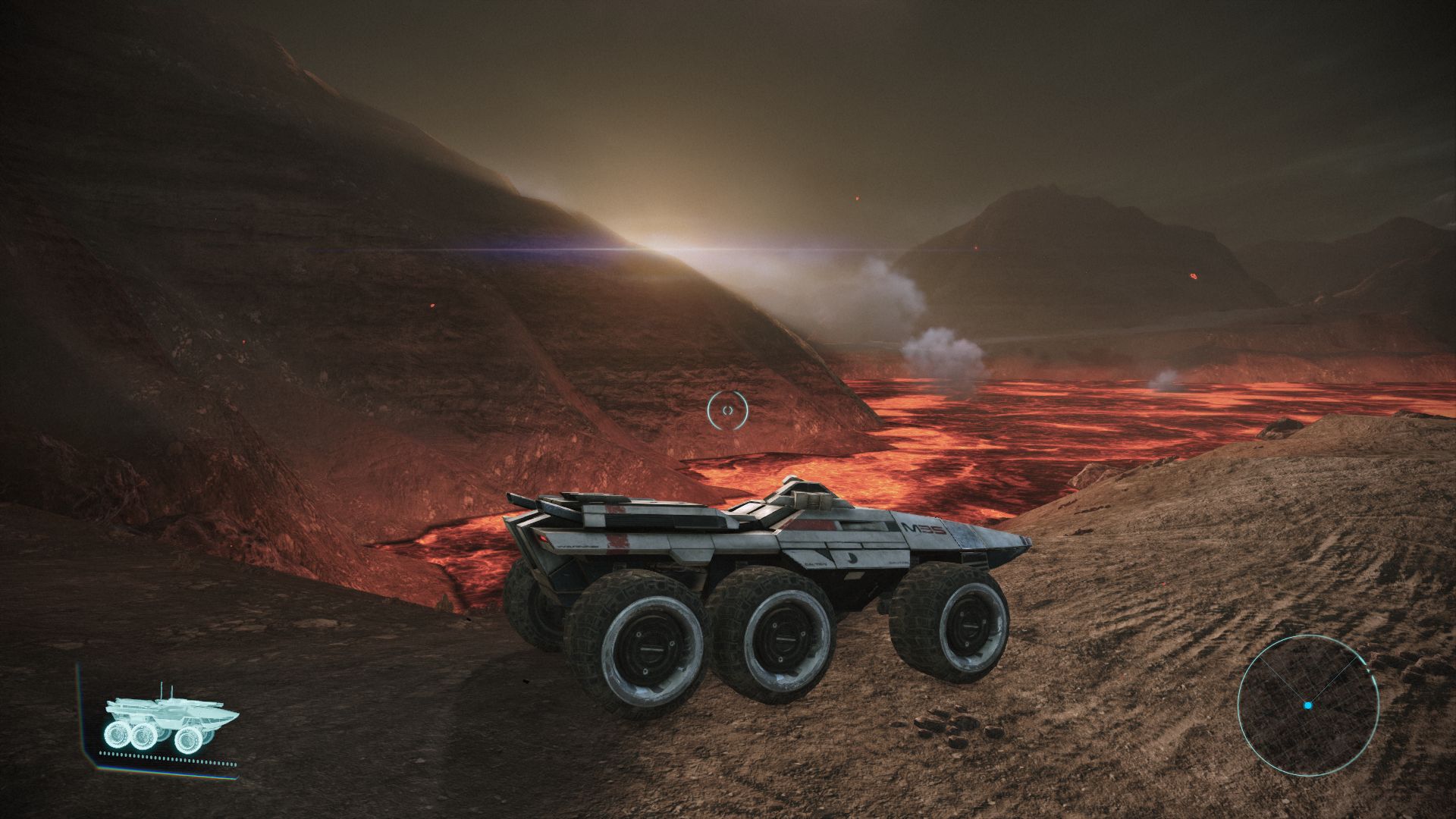
"If you want to gelidity and just feel like you are an explorer, on that point's no true pressure," Walters says. "There's a lot of moments like that. Running around Noveria or the Presidium can Be frustrating if you're in a hurry, just likewise there's levels in in that respect that you just wouldn't pick up people attempt anymore. Sometimes for angelical reason! But also because we wanted to make something that felt communicatory. We desirable to make something that felt like it had a huge footprint and you can cast around in it always."
Walters plant himself sinking into Mass Set up 2's planet-scanning as well, another divisive feature film that's been left as information technology was. "I assume't bed how many times I've gone in to test a germ or do something, it's late at night, and all all of a sudden it's like I've spent incomplete an hour planet-scanning," he says. "I was retributive present to test something. Why am I acting the gage and scanning planets?"
Meek, WHO wasn't part of BioWare during the production of the original trilogy, has enjoyed eyesight up close how the first game's areas were designed and what makes them unique. "You're in these levels that feel opposite than a contemporary level, because they're reinforced whole different," he says. "They're not well-stacked out of kits that lock together. It's not a tile set, like how we normally frame levels." It's something that marks the original out from its sequels, and was a feeling atomic number 2 wanted to keep.

"There's something about those Mass Effect 1 levels where they'Ra building it 'wrong' but it ends up with these really memorable places that are assorted than past things you see. You're in those levels and it's zero-g and you're walking on the side of a spaceship and you're flinging some guy up with your biotic powers and he's flight inactive into space. Like, this is really hard to fare in modern engines. On that point'd be a good deal of people World Health Organization'd be like, 'Oh, no, I don't want to exercise that.' Honestly, it's something that I really wish to take dispatch and continue into everything that I do, going guardant. That idea of like, don't hold yourself rearwards."
Comparisons between the Known Edition and the originals are inevitable, which Submissive calls both a present and a curse. "If you make some muddle that has the light averaging out on Shepard and the shadows are working and that looks better in 10 scenes, merely it makes information technology look worsened in 10 scenes, you have a go at it that people are going to feel those 10 scenes that information technology makes information technology look worse and equivalence those and run with that, right?" He consoles himself with the fact that "it was a 96 Metacritic game ahead and people are gonna understand how much troublesome make for we've put into this."
Walters looks at the Fabled Edition equally a unplanned to recognise more of what BioWare was imagining back at the start of the serial, likewise Eastern Samoa fix things that inevitably couldn't be fixed because on that point was always a new game to move onto. "The ability equally a developer to be capable to revisit that, 'OH, these are the things that we learned from doing three games in a row', and apply them book binding to ME 1 and 2 and 3 and undergo that second chance to finis is very rewardful," helium says. "You don't get that chance very often. It's been great to actually equal able to go in and smooth off those edges that haunted my dreams for years."

Jody's first computer was a Commodore 64, so he remembers having to use a code wheel to play Pool of Refulgence. A late medicine journalist who interviewed everyone from Giorgio Moroder to Trent Reznor, Jody also co-hosted Australia's first radio set show about videogames, Letter z Games. He's written for Stone Paper Shotgun, The Big Issue, GamesRadar, Zam, Glixel, and Playboy.com, whose cheques with the bunny logo made for play conversations at the bank. Jody's first article for PC Gamer was published in 2015, he edited PC Gamer Indie from 2017 to 2018, and actually did play every Warhammer videogame.

Source: https://www.pcgamer.com/how-bioware-went-back-in-time-to-make-mass-effect-legendary-edition/
Posted by: mckaythimpubstur.blogspot.com
0 Response to "How BioWare went back in time to make Mass Effect Legendary Edition | PC Gamer - mckaythimpubstur"
Post a Comment